
martial poetics
embodied narrative structures

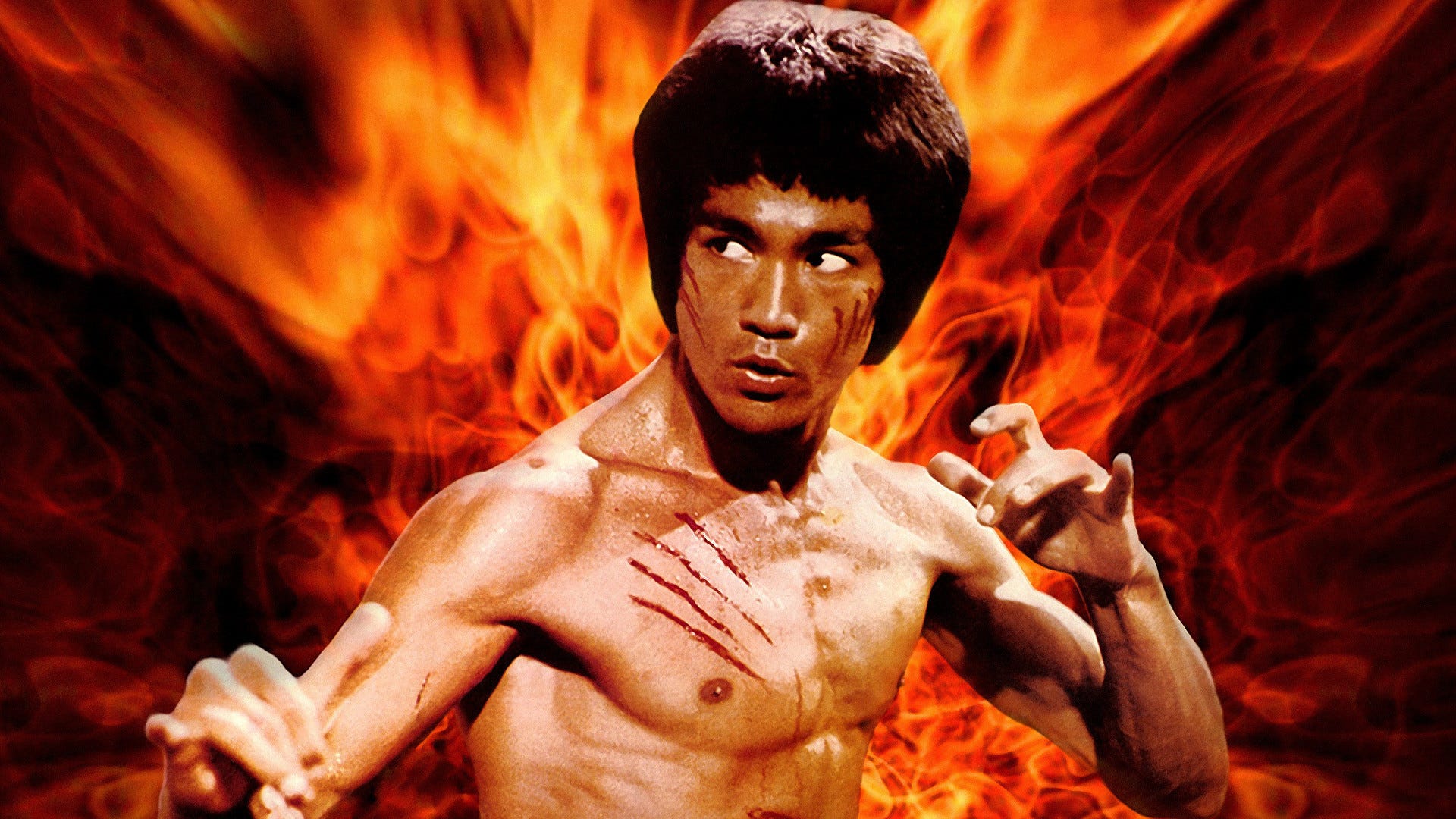
The embodiment of a girl-prisoner is head down in subservience. I remember the feeling of disappearing myself for survival. It is a shape I inhabit to this day, though less and less the more I practice fully inhabiting myself.
There is a particular sensation I feel when someone is in the middle of ridiculing me but I know, I know, I know they are not right sized in their approach. At best they are mistaken. At worst they are getting a thrill from whoever I remind them of, someone they never got to release this toward.
Punitive energy tells on itself. The more harmful someone becomes with their words and actions, the easier it is to see the path that leads back to themself. Their own shame. Their own safety shape.
Those patterns become predictable. I learned to follow them with my body to survive what I had to survive. Nowadays, I’m learning how to Aikido harmful energy, letting it pass through me as motion instead of injury.
My body has been conditioned to respond to authority, especially harmful ridicule or abuse of power, by folding inward. My eyes drop and pull back. My vision blurs until I can only fixate on one small square of floor in front of me. Inside me, of course, is a volcano begging to erupt.
In volcanic state, I can only take tiny sips of breath. My jaw tightens. The edges of my body begin to armor. Shoulders, hips, fists, ankles, teeth. Everything sharpens. Everything prepares. My words disappear. It takes all my effort both to hold back the fire and to refuse to absorb the harm being thrown my way. What I do next is a surprise to both me and the person who triggered my inner magma.
It was a brilliant survival strategy for a child who was powerless to corrections officers with a hard-on for control. They goaded us girl-children with a gleam in their eyes that suggested they truly believed they were taming savages, keeping the world safe. I’m still healing from it and to this day I pop off unexpectedly or shut down and disappear when I cannot discern whether I am actually powerless.
My experience is only one example of how a lifetime of armoring lives on in the body. I’ve developed autoimmune disorders. Physical pain. Flashbacks that arrive without context and make no sense to the present moment. Even writing about this, as much as I have been lately, makes me all sticky and sweaty. Gross. We aren’t supposed to talk about these things. We aren’t supposed to sound like whiny little victims. Get over it.
Oddly, being told to calm down and get over it (even if it’s just the inner cacophony of haters I’ve absorbed over the years) hasn’t… seemed to be of any help.
But when I loosen my shoulders, release my belly, take a real exhale, feel the ground, connect the palm lines of my feet to the mycelial network below me, something changes. I recognize that the Earth is a collaborator with the Living. That when I really feel the energy of my feet, I feel the earth pushing back like a magnet saying: I’m here, too, holding you. My gaze steadies upward. A soft focus arrives so I can take in the colors, auras, textures, light around me. My spine lengthens like a tree. I can look my opponent in the eyes, and a single word comes out of my mouth:
No.
The word ripples through time and space in a way that lifts the neck hairs of any bystander. The word no moves through my entire body like warm lava, turning my fingers from blue to luminous. I no longer need hard, sponged kneecaps or teeth grinding themselves into fangs. I stand inside gravity with a simple spell I am only just now learning how to truly inhabit.
No.
I want to live inside a Poiesis (to bloom become emerge reveal) where my body is always already being rewritten toward breath, toward voice, toward song, toward an ever-flowing life force that does not abandon me when conflict arrives. I want a story in which my body is allowed to stay and I am in charge of my own narrative. I want a self that I consent to, for fucks sake!
I want to understand the narrative poetics of traumatic shapeshifting. I want to write the way I learned martial arts: split stance, harden only when necessary, move like water, dance with your opponent, keep your gaze steady, guard what is vital without closing the heart, pivot instead of freezing, breathe before striking, feel the ground before advancing, conserve energy, listen through the skin, strike only what is true, return to center again and again.
I want to write in a way that remembers distance is a choice. That contact is information. That balance can be recovered mid movement. That retreat is not disappearance but strategy. That the body already knows how to survive what the mind still calls impossible.
I want sentences that know when to brace, when to yield, when to step closer, and when to refuse.
This is what I am beginning to call martial poetics. A way of writing shaped by body patterns as much as plot, by breath as much as climax, by contact as the ground where the story stays, leaves, returns. A very unchronological order of things.
In Muay Thai I had to learn something quickly. You do not look away from your opponent. Looking away is how you disappear from yourself. Looking away is how you get punched in the fucking face and knocked right off your center. Tinnitus, too. Very unpleasant.
Instead, you must step closer to your opponent. Close enough to feel their breath. Close enough to read their shoulders before they strike. Close enough to guard your body without abandoning your gaze. This requires you to transmute fear into attention, into timing, into presence. It also requires you to recognize your opponent as human.
It requires you to be accountable to the parts of yourself that might wish to enact your own version of sadistic projection onto others. The practice is not only about learning how to strike. It is about learning how not to engage with fire when it finally becomes available to you. It requires discipline to know when to blaze, and when to remain a steady flame.
I think (because I myself am still learning what I mean by martial poetics) that the practice is not only about learning how and when to strike. It is also about refusing to become the person who once frightened you. And it is about gathering enough courage to observe the motivations of your opponent without absorbing their distortions.
This is also how I want to write. I step closer to pain. I remain inside the body that is telling the story. And then I soften the edges and allow more of myself to arrive.
It’s some kind of pink thread that weaves me through story and gathers fragments into something of a complete picture. Or at least a kaleidoscope of moving images.
I am beginning to think of traumatic shape-making as a choreography of narrative. A form that moves at the pace of breath and tissue. A structure that spirals, listens, adjusts, returns. A story that knows how to stay.
I like what Jane Alison says in Meander, Spiral, Explode when she writes: “For centuries there’s been one path through fiction we’re most likely to travel—one we’re actually told to follow—and that’s the dramatic arc: a situation rises, grows tense, reaches a peak, subsides… There’s power in a wave, its sense of beginning, midpoint, and end; no wonder we fall into it in stories. But something that swells and tautens until climax, then collapses? Bit masculo-sexual, no? So many other patterns run through nature, tracing other deep motions in life. Why not draw on them, too?”
In the same way I want to find narrative structure the way that I want to fuck women I love (sustained attention, repetition, return, all day long, multiple orgasms-- if you’re offended by this maybe you been too closely following the linear narrative arc in your sex life. I don’t know your life.) I also want to find narrative structure that mirrors breaking out of a freeze response and saying the word “No” with every punch.
I think martial poetics is writing that follows the choreography of the nervous system as it moves into and out of threat.
Below is only for the nerdiest of nerds and I would LOVE to hear your thoughts.
Here’s an example of a fight scene:
My opponent’s shoulder dips and I feel the strike coming before it arrives. I step closer instead of back. My shin meets hers with a clean, ringing sound that travels up my leg to ears and I hear a bell ringing. The crowd in my head as well as the audience disappears. It’s just me and her now. There is only breath, timing, the warmth of sweat at my collarbone, the rooted knowledge of my feet finding the earth again and again as I circle, guard high, eyes open, staying inside myself while she stays inside herself, both of us listening for the smallest opening.
Martial poetics notes:
My opponent’s shoulder dips and I feel the strike coming before it arrives [the body reading narrative before language; intuition as timing]. I step closer instead of back [proximity as authorship; contact over avoidance]. My shin meets hers with a clean, ringing sound that travels up my shin to my ears and I hear a bell ringing [impact as sentence; sensation as punctuation; the body as instrument of perception]. The crowd in my head as well as the audience disappears [focus as structure; removing spectators from the narrative field]. It’s just me and her now [relational presence as scene-making]. There is only breath, timing, the warmth of sweat at my collarbone [breath as pacing; embodiment as atmosphere], the rooted knowledge of my feet finding the earth again and again as I circle [grounding as continuity; movement as syntax], guard high, eyes open [gaze as ethics; protection without withdrawal], staying inside myself while she stays inside herself [mutual containment; sovereignty without domination], both of us listening for the smallest opening [listening as narrative entry; attention as strategy].
Here is the martial poetics elements list drawn from the paragraph:
· the body reading narrative before language
· intuition as timing
· proximity as authorship
· contact over avoidance
· impact as sentence
· sensation as punctuation
· the body as instrument of perception
· focus as structure
· removing spectators from the narrative field
· relational presence as scene-making
· breath as pacing
· embodiment as atmosphere
· grounding as continuity
· movement as syntax
· gaze as ethics
· protection without withdrawal
· mutual containment
· sovereignty without domination
· listening as narrative entry
· attention as strategy
Now, here’s a writing portal for YOU to try: Use martial poetics to write a day in the life of a character you are working on or something in nature [ limitless possibilities you can write about the dust on your window and I’d melt.]
My example portal (it’s an apocalyptic future of course. what do you want from me?):
~
There is a crack of lightening followed by thunder that shakes the desert floor.
Ayla wakes. It is twilight. She musters the strength needed to move again. She travels only by night now. The daylight belongs to drones, to heatstroke, to the mouths of the newly opened faults in the earth. She lies still long enough to feel which parts of her have already braced for the long night ahead. Breath first. Then feet to the earth, sensing the ground as the rumbling dragons below ground answer back. She waits for the cue to move. It comes as a small shift in the air, a loosening in her spine, the sense that the path has opened just enough to carry two bodies instead of one.
Eliyah is already awake, standing beside the ruined culvert, eyes fixed somewhere far beyond the horizon, caught in a memory the present cannot reach. Ayla recognizes this look immediately and sucks in her breath. He is not himself. Memory has tugged him sideways into an older dimension of danger his body has not yet finished surviving. She steps into his line of sight slowly, careful not to startle him. She is ready. She moves close enough for breath. Close enough for recognition. She lowers her shoulders, softens her jaw, lets her stance widen just enough that her balance becomes something he can borrow.
Time traveling can make some return monstrous.
She takes in his altered, feral state. His gaze is too bright and unfocused at once. His shoulders lifted toward his ears. Fingers half curled as if remembering a weapon that is no longer there. Breath shallow. Weight pitched forward. His every tendon is listening for impact that has not yet arrived.
When his hands begin to shake, she loosens her exhale and places her palm against his wrist, steady pressure, steady timing, guiding him back through body rather than words.
There is a moment of rumbling. She recognizes the fire inside him deciding whether to erupt. She feels her own fear rise and lets it drop through her heels into the earth, widening her stance instead of retreating. She does not allow her fear to force her to break contact with him. She has to stay steady in time or he will drown her backwards.
Remember me, her posture says. Stay with me.
When his gaze finally returns, the brightness drains from it. His shoulders lower a fraction. Air reaches the bottom of his lungs again as if the world has given him permission to remain inside it.
“I thought you were someone else. I almost killed you,” he says, the words leaving him on a long exhale of regret.
“That’s assuming you’d even be able to,” Ayla says, smirking, palm still open to his.
They exhale together and begin walking west under the last seam of night, listening for the smallest openings in the dark. Knowing the ocean is waiting for them.
~
Below I attempt to explicitly track how the body moves into activation and toward regulation as part of a narrative method. I will attempt to show moments in this random story for when I see martial poetics working as narrative structure, with trauma-state transitions as the form and martial arts as the response. In martial poetics, trauma is not just a backstory. It is a change in tempo, distance, perception, and authorship of the body.
trauma interrupts narrative continuity
martial poetics restores movement between states
stance replaces plot
There is a crack of lightning followed by thunder that shakes the desert floor [rupture as opening bell; external shock establishes the nervous system field].
Ayla wakes [body first; consciousness arrives through sensation before thought]. It is twilight [threshold time; safest movement occurs between exposure states]. She musters the strength needed to move again through the night [energy conservation after prolonged survival load]. She travels only by night now [trauma-adapted timing; circadian strategy shaped by threat, world-building based on how one has to move through a traumatized world]. The daylight belongs to drones, to heatstroke, to the mouths of the newly opened faults in the earth [environment encoded as danger map]. She lies still long enough to feel which parts of her have already braced for the long night ahead [pre-movement body scan; detecting residual armor]. Breath first [downshifting activation before action]. Then feet to the earth, sensing the ground as the rumbling dragons beneath her answer back [grounding restores orientation beyond the self]. She waits for the cue to move [action emerges from regulation, not urgency]. It comes as a small shift in the air, a loosening in her spine, the sense that the path has opened just enough to carry two bodies instead of one [safety increases mobility; co-regulation expands capacity].
Eliyah is already awake, standing beside the ruined culvert, eyes fixed somewhere far beyond the horizon, caught in a memory the present cannot reach [trauma time override; perception locked in prior threat field while doing the work of character development and world-building]. Ayla recognizes this look immediately and sucks in her breath [mirror activation; her body registers his state]. He is not himself [temporary loss of narrative continuity]. Memory has tugged him sideways into an older dimension of danger his body has not yet finished surviving [incomplete defensive response still running]. She steps into his line of sight slowly, careful not to startle him [approach calibrated to avoid escalating his threat response that would disrupt linear time]. She is ready [regulated readiness rather than reactive defense]. She moves close enough for breath. Close enough for recognition [distance adjusted to support re-orientation]. She lowers her shoulders, softens her jaw, lets her stance widen just enough that her balance becomes something he can borrow [postural co-regulation; lending nervous system stability].
She takes in his altered, feral state [reading activation through micro-signals]. His gaze is too bright and unfocused at once [threat scanning vision]. His shoulders lifted toward his ears [defensive armoring]. Fingers half curled as if remembering a weapon that is no longer there [motor memory outrunning present reality]. Breath shallow [sympathetic dominance]. Weight pitched forward [fight response loading]. His every tendon is listening for impact that has not yet arrived [anticipatory strike readiness without stimulus].
When his hands begin to shake, she loosens her exhale and places her palm against his wrist, steady pressure, steady timing, guiding him back through body rather than words [tactile orientation interrupts threat loop; contact restores present-time signaling].
There is a moment of rumbling [shared nervous system escalation threshold]. She recognizes the fire inside him deciding whether to erupt [violence framed as unresolved activation, not intention]. She feels her own fear rise and lets it drop through her heels into the earth, widening her stance instead of retreating [self-regulation prevents escalation cascade]. She does not allow her fear to force her to break contact with him [staying present interrupts trauma contagion].
Remember me, her posture says. Stay with me [relational anchoring restores identity continuity/ using trauma responses for explicating character relationships].
When his gaze finally returns, the brightness drains from it [exit from hypervigilance]. His shoulders lower a fraction [armor release begins]. Air reaches the bottom of his lungs again as if the world has quietly given him permission to remain inside it [parasympathetic return; breath completes the unfinished defensive cycle].
“I almost killed you,” he says, the words leaving him on a long exhale of regret [language reappears after regulation].
“That’s assuming you’d even be able to,” Ayla says, smirking, palm still open to his [humor signals safety; play restores relational range].
They exhale together and begin walking west under the last seam of night, listening for the smallest openings in the dark [synchronized breath marks restored co-movement]. Knowing the ocean is waiting for them [future orientation returns after threat resolution].
Ok so, yes, this is the nerdiest thing I’ve ever posted (probably…) but if you are interested in joining me for martial poetics writing where I will use my training in martial arts and poetics, please click here to sign up:
https://www.tideandthreshold.com/current-offerings